Premium Ceramic Coating in Phoenix
A ceramic coating is a liquid polymer that cures into a thin, hard, hydrophobic layer chemically bonded to your clear coat. Unlike wax, which sits on top of the paint and burns off quickly in Phoenix summer surface temperatures, a coating stays put through repeated washes and months of direct sun.
What a coating actually changes day to day: dust and road film release with far less agitation, sprinkler overspray and hard-water minerals sit on the surface instead of etching into it as quickly, and the paint stays glossy without needing a fresh coat of wax every six weeks. It is not a force field — it will not stop rock chips or careless door dings — but it is the single most useful protective step for a car that lives outside in Arizona.
Process
How a coating job runs at your place
Step 1
Decontamination wash
Two-bucket hand wash, iron remover on the paint and wheels, and a clay treatment to pull embedded rail dust and highway fallout out of the clear coat.
Step 2
Paint inspection
We check the paint under lighting for swirls, oxidation, and etching, then agree on how much correction the panel condition actually needs before coating.
Step 3
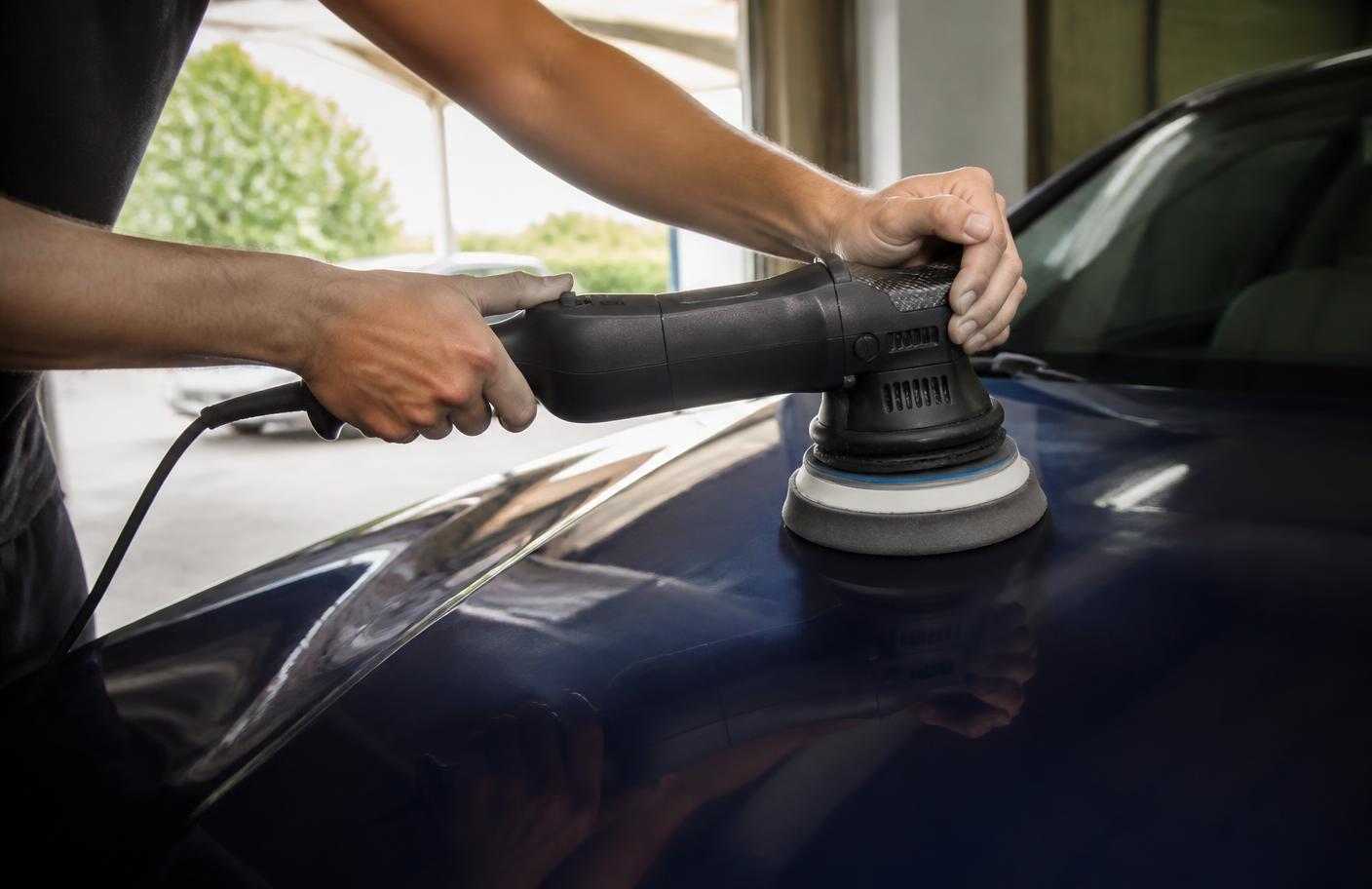
Machine polish
One or more polishing stages to remove the defects the coating would otherwise lock in. Coating unpolished paint just seals the swirls under a glossy layer.
Step 4
Panel wipe
An alcohol-based wipe-down strips polishing oils so the coating can bond to bare clear coat rather than residue.
Step 5
Coating application
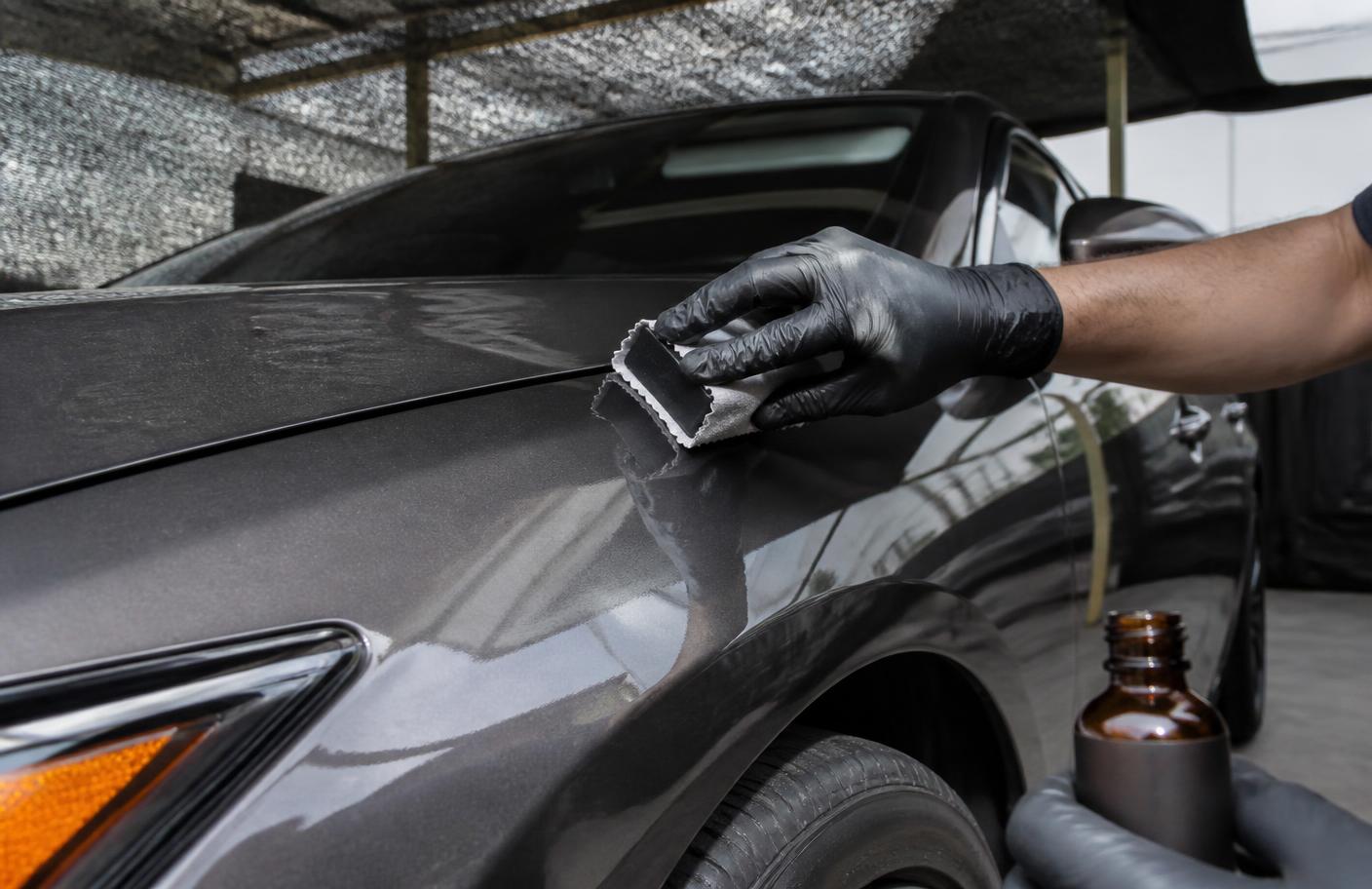
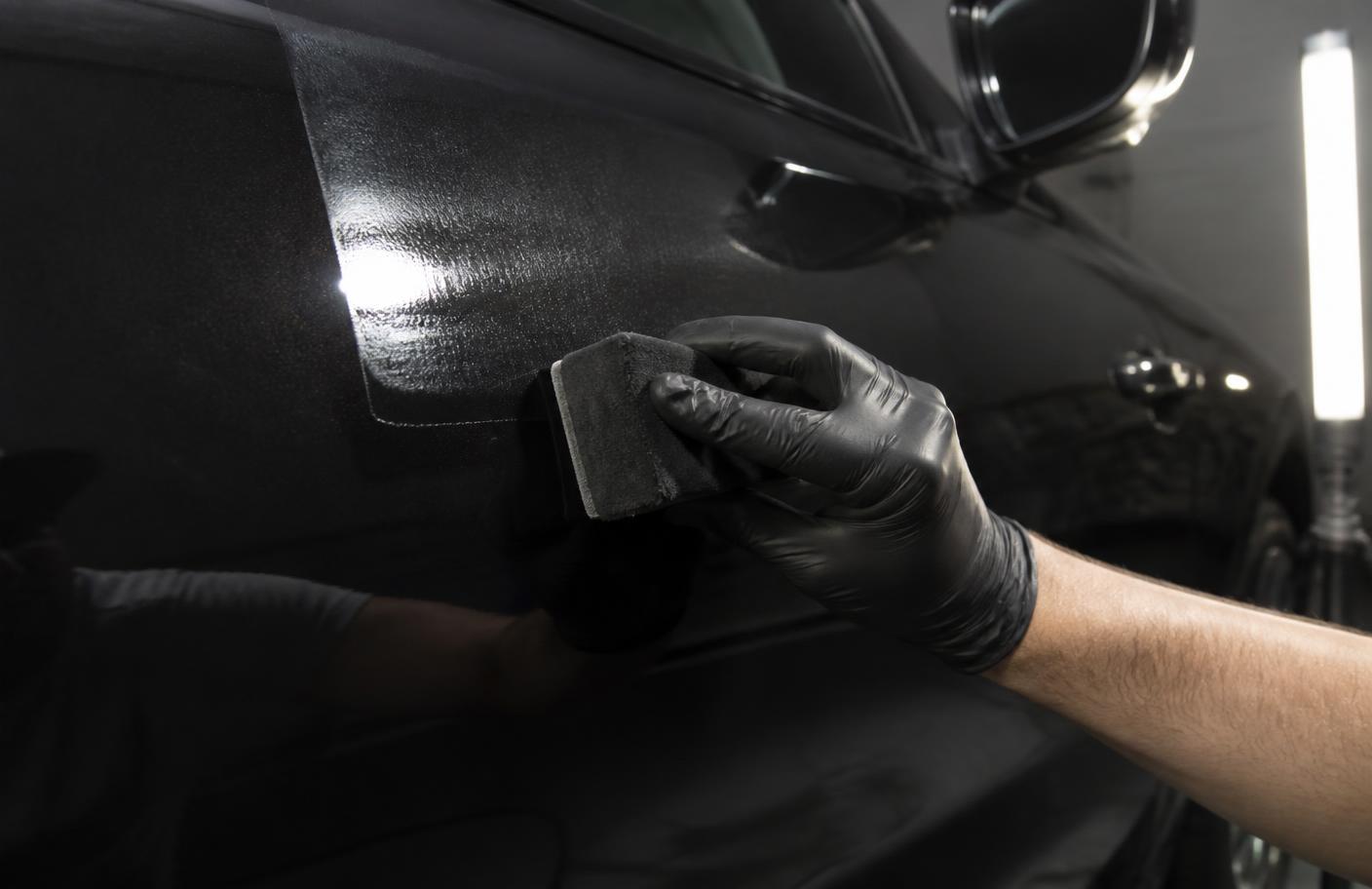
Applied panel by panel with a suede applicator, leveled at the correct flash time, and checked under light for high spots.
Step 6
Cure window
The vehicle needs to stay dry — a garage, carport, or shaded space is ideal for the initial cure. We plan the appointment around where your car can sit.
What you get out of it
- Dust and desert grit release with a rinse instead of scrubbing
- Hard-water and sprinkler spotting is easier to remove before it etches
- UV-driven fade and oxidation have a sacrificial layer to work against
- Bug splatter and monsoon road film wipe off with less pressure
- Gloss that holds up without re-waxing every month
Realistic expectations
- — Coating is a full-day service on most vehicles once correction is included.
- — A coating does not remove existing scratches — polishing does, before the coating goes on.
- — Maintenance still matters: pH-neutral washes, no automatic brush tunnels.
- — Coverage over heavy oxidation may need more correction time, which we confirm on site.
Local context
Why coatings make sense on a Phoenix car
Paint here takes a beating that cars in milder climates simply don't. Horizontal surfaces — hood, roof, trunk lid — get the full angle of the summer sun for months, and that UV load is what turns red and black paint chalky and dull over a few years.
The second problem is water. Valley tap water is hard, so a car rinsed in a driveway or parked near a sprinkler head collects mineral deposits that bake on within minutes on a 110-degree panel. A coated surface gives you a window to wipe those spots off before they etch.
Coatings also help with the seasonal cycle: fine dust through the dry months, then monsoon storms that turn that dust into a gritty film across the whole car. On a coated finish, that film comes off during a normal maintenance wash instead of requiring aggressive scrubbing that puts swirls back into the paint.
The basics
What a ceramic coating actually is
A ceramic coating is a liquid resin — usually a silica-based polymer — that you apply in an extremely thin film to properly prepared automotive paint. As the solvent flashes off, the resin cross-links and cures into a hard, transparent layer that is chemically bonded to the clear coat rather than resting on top of it like a wax. That bond is the whole difference. Wax is a soft sacrificial film that washes and bakes away over weeks; a cured coating stays on the panel through repeated washes, detergents, and months of direct sun.
Day to day, what you notice is surface behavior. The coated surface is slick and hydrophobic, so water beads and sheets off instead of clinging in flat films, and dust, road grime, and bug residue have far less to grip. Contaminants release with a gentle wash rather than pressure and repeated passes, which matters more than it sounds: most swirl marks in Phoenix paint come from the washing, not the driving. A coating also adds optical depth and gloss over corrected paint, and it resists mild chemicals — detergents, bug remover, fallout from the road — better than wax does.
The honest framing is "sacrificial layer," not "armor." The coating takes the abuse the clear coat would otherwise take, and it makes cleaning easier. It does not change the physics of impact, and it does not improve paint that is already damaged. That is why the prep work — decontamination and paint correction — is the part that determines how the finished car looks, while the coating determines how easy it is to keep that way. If you're mainly after clean paint and short-term shine, an exterior hand wash and wax may be the more sensible service.
Local conditions
Why coatings make particular sense in the Valley
Year-round UV load
Phoenix vehicles take a solar dose that cars in most of the country never see: intense sun nearly every day, and summer surface temperatures on a dark hood that run far above ambient air. The damage lands on horizontal panels first — hood, roof, trunk lid, and the upper shoulders of the fenders — because those face the sun directly for hours. Cars parked outside at an apartment complex or in an uncovered office lot are the most exposed, and they're the ones that go chalky on red and black paint years before the rest of the vehicle looks tired. A coating gives UV something to attack before it reaches the clear coat, which slows fade and oxidation. It does not block sun damage, and covered parking still does more for your paint than any product does.
Hard water everywhere
Valley tap water is mineral-heavy. Rinse a car in a driveway, let a sprinkler head clip the same fender every morning, or let water dry on a 140-degree panel and those dissolved minerals stay behind as deposits. Left through a few heat cycles, they can etch a faint ring into the clear coat. On a coated surface, the deposit sits on a slick, non-porous layer, so you generally have a wider window to wipe it off before it bites. That is a meaningful improvement, not immunity — coated cars still get water spots, and drying technique still matters.
Desert dust
Fine dust is the constant here. It blows off open desert, off construction sites along the 101 and 202 corridors, and off unpaved lots, then settles on every horizontal surface within a day of a wash. On uncoated paint that dust bonds into a film that needs agitation to remove, and agitation on gritty paint is exactly how swirl marks form. Reduced adhesion is the practical benefit of a coating: a pre-rinse carries most of it away and the wash mitt does less work, so each maintenance wash puts less marring into the finish.
Monsoon season
Summer storms combine the two problems. Wind-driven dust lands on the car, rain wets it into a muddy road film, and then it dries in the sun into a mineral-and-grit crust that spans the whole vehicle, including glass and wheels. Following a storm, a coated car usually cleans up with a rinse and a light wash where an uncoated one needs chemical decontamination to get back to neutral.
What a coating does
- Easier washing. Less agitation to get the car clean, which is the single best way to keep new swirls out of the paint.
- Hydrophobic behavior. Water beads and sheets instead of clinging, so panels dry faster and with less towel contact.
- Reduced contaminant adhesion. Dust, brake dust, and road film sit on the surface rather than bonding into it.
- Chemical resistance. Detergents, bug remover, and environmental fallout have a harder time reaching the clear coat.
- Easier bug removal. Splatter from an I-10 run softens and wipes off with far less pressure.
- Bird droppings clean up faster. Still remove them quickly — the acid is aggressive — but a coating buys you time.
- Improved gloss. Over corrected paint, coatings add depth and a sharper reflection, especially on dark colors.
- Slower oxidation. A sacrificial UV-resistant layer means less of the sun's energy reaching the clear coat.
- No re-waxing every few weeks. One durable layer replaces a maintenance cycle that Phoenix heat cuts short anyway.
- Easier wheels, when coated. Coated wheel faces release baked-on brake dust with much less scrubbing.
What a coating does not do
- It does not make paint scratch-proof.
- It does not stop rock chips from gravel on the 51 or the 101.
- It does not prevent door dings or parking-lot damage.
- It does not replace paint protection film, which is a thick impact-absorbing layer and a different product entirely.
- It does not prevent every water spot — hard water on a hot panel can still leave deposits.
- It does not repair oxidation that has already set into the clear coat.
- It does not remove scratches or swirl marks. It locks in whatever is under it.
- It does not eliminate washing. It makes washing easier and safer.
- It does not make neglect harmless. Bird droppings, sap, and sprinkler mineral left for weeks will still cause problems.
The clean way to think about it: paint correction fixes or reduces defects that are already in the finish. Ceramic coating protects the finish you end up with. Skipping the first step and buying the second is how people end up with very glossy, very well-preserved swirl marks.
Process
Preparation is most of the job
The coating itself takes a couple of hours to lay down. Everything before it is what you are actually paying for, and it is what separates a coating that looks right for years from one that looks like a glossy mistake. Here is how a full installation runs:
- 1. Assessment of the vehicle and paint, in person, before anything is agreed.
- 2. Two-bucket hand wash with pH-neutral soap, wheels and wheel wells first.
- 3. Chemical decontamination — iron remover for embedded fallout, solvent for tar and adhesive.
- 4. Mechanical clay decontamination where the paint still feels rough after chemical work.
- 5. Paint inspection under focused lighting to map swirls, etching, and oxidation.
- 6. Test polishing on a small section to find the least aggressive combination that works.
- 7. Correction or enhancement at the level the paint condition and your goals justify.
- 8. Panel wipe with an alcohol-based solution to strip polishing oils so the coating can bond.
- 9. Coating application, panel by panel, with a suede applicator.
- 10. Leveling at the correct flash time and inspection under light for high spots.
- 11. Initial cure with the vehicle kept dry and out of direct sun where possible.
- 12. Aftercare walkthrough so you know how to wash it and what to avoid.
Not every vehicle gets the same correction. A one-year-old garage-kept sedan and a ten-year-old black truck that has lived in automatic brush washes are different jobs, and we say so before quoting rather than after. Correction level is a decision made with you, based on paint condition, clear-coat thickness, how the car is used, and what you want to spend.
Buyer decision
What condition is your paint in?
Newer vehicle, good paint
Usually decontamination and a light enhancement polish rather than multi-stage correction. Most of the budget goes into protection, which is the best-value version of this service.
Daily driver with light swirls
A one-step correction typically removes the majority of wash marring and brings back gloss without thinning clear coat unnecessarily. The most common scenario we see.
Dark vehicle, moderate defects
Black, dark gray, and dark blue show everything. More correction is often worth it here because the difference is dramatic and permanently visible once coated.
Heavily oxidized or neglected
Needs an in-person look first. If the clear coat is failing, more polishing makes it worse, and coating over a dying clear coat is not a repair. Sometimes another service comes first.
Recently repainted
Fresh paint and body-shop work need evaluation before polishing or coating — refinished panels have their own curing considerations and we won't guess at them.
Enthusiast car, garage kept
Often the finest correction work and the most rewarding result, because the car isn't fighting daily sun and can be maintained properly afterward.
The goal is not automatically perfect paint. The right prep level depends on condition, clear-coat health, how the vehicle is used, what you expect to see when it's finished, and your budget. Chasing the last five percent of defect removal on a work truck is a poor use of money; skipping correction on a black show car is a poor use of a coating.
Comparison
Ceramic coating vs. wax vs. paint sealant
| Carnauba wax | Paint sealant | Ceramic coating | |
|---|---|---|---|
| Durability in Phoenix | Shortest-term; heat is hard on it | Medium-term synthetic protection | Longest-term of the three |
| Prep required | Minimal — wash and go | Wash, decontamination, often light polish | Full decontamination and correction |
| Maintenance | Frequent reapplication | Periodic reapplication | Safe washing plus occasional decontamination |
| Water behavior | Beads well while fresh | Good beading and sheeting | Strongest, longest-lasting hydrophobics |
| Chemical resistance | Low | Moderate | High |
| Gloss | Warm, deep glow | Bright and reflective | Sharp, deep gloss over corrected paint |
| Relative cost | Lowest | Middle | Highest up front |
| Best for | Quick shine, car being sold soon | Budget-conscious durable protection | Cars you're keeping, especially parked outside |
Ceramic coating is not automatically the right answer. If you want inexpensive protection for a season, or the car is going up for sale, our exterior hand wash and wax service gets you a clean, protected car for a fraction of the cost. Coating earns its price on vehicles you intend to keep and maintain.
Longevity
How long does a ceramic coating last?
We don't quote a fixed number of years, because the honest answer depends on variables that live with your car, not with us. The product and layer system matter. So does preparation — a coating bonded to properly decontaminated, oil-free clear coat behaves differently than one laid over residue. After that it's all usage: outdoor versus garage parking, how many hours a week the car sits in direct sun, annual mileage, how it gets washed, what chemicals touch it, and how much hard water and sprinkler overspray it takes.
There is also a distinction worth understanding before you buy. There is a difference between "the coating is still physically on the paint" and "the coating still behaves the way it did the week it was installed." Hydrophobics fade first — beading gets lazier, sheeting slows down — while the chemical and UV protection is still doing work underneath. That is normal. A maintenance decontamination and, where appropriate, a compatible topper can restore much of the surface behavior without redoing the whole installation. A car washed at brush tunnels every week will lose both faster than one hand-washed correctly.
Pricing
What ceramic coating costs in Phoenix
We quote per vehicle rather than posting a flat price, and the reason is not evasiveness — it's that two customers asking for "ceramic coating" can be asking for jobs that differ by many hours of labor. What moves the number:
- — Vehicle size and panel complexity: a coupe, a three-row SUV, and a lifted truck are not the same surface area.
- — Current paint condition: swirls, etching, oxidation, and previous polishing all change the plan.
- — Contamination level: heavily embedded fallout and overspray add decontamination hours before anything else happens.
- — Correction stage: enhancement, one-step, or multi-stage, decided after a test section.
- — The finish you want: "much better than it was" and "as close to flawless as this clear coat allows" are different budgets.
- — Surfaces coated: paint only, or paint plus wheels, glass, and compatible trim.
- — Location and access: shade, power, space to work around the car, and whether conditions suit a coating at all.
Concretely: a two-year-old silver sedan that's been hand washed since new might need decontamination, a light enhancement, and coating — a straightforward day. A black SUV with five years of automatic-wash swirls needs a full test-and-correct cycle before a drop of coating goes on, and that is where the hours go. Same request, very different job. For how detailing pricing works across all our services, the Phoenix detailing cost guide breaks down every factor.
Fit
Which vehicles benefit most
Daily drivers parked outside
The clearest case. Maximum sun and dust exposure, plus frequent washing — exactly the two things a coating helps with.
New vehicles
Minimal correction needed, so the money goes into protection from the start instead of repair later.
Black and dark-colored cars
Show every water spot and swirl. Easier cleaning and better gloss retention are most visible here.
Luxury and enthusiast cars
Paint you intend to preserve, often garage-kept, where a coating keeps a corrected finish looking corrected.
SUVs and trucks
Large horizontal surfaces catch the most sun and dust; also the hardest vehicles to wash by hand, so easier washing matters more.
EVs and Teslas
Often softer factory paint that marrs easily, and owners who wash frequently — a good combination for coating.
Highway commuters
Bug splatter and road film from I-10, the 202, and the 101 release far more easily from a coated front end.
Fleet and work vehicles
Where appearance matters to customers, easier maintenance washes keep a fleet presentable with less labor. See our fleet detailing options.
Mobile service
Coating installed at your location
Everything we do is mobile, and coating is no exception — but coating is the service where the working environment matters most. The best setups, in order: your garage, a carport, covered parking at an apartment or office, and a driveway with genuine shade for the length of the appointment.
The reasons are practical. In direct Arizona sun a panel gets hot enough that coating flashes almost on contact, which makes leveling difficult and invites high spots that then have to be polished off. Wind carries dust onto wet coating. An unexpected sprinkler cycle or a monsoon cell can ruin an initial cure. So we talk through your space when you book, and if conditions won't support a good installation we say so and work out an alternative — an early-morning start, a different day, or a different location — rather than installing a coating we know will not turn out right.
Curing
Curing in Phoenix conditions
After application, the coating goes through an initial cure where it is still vulnerable. During that window the vehicle needs to stay dry — no rain, no sprinklers, no washing — and out of extreme panel temperatures where possible. Shade or covered parking is strongly preferred.
Cure times vary by product and by ambient conditions, so we don't publish a single universal number; you get the specific window for the coating used on your vehicle, in writing, along with aftercare instructions. In summer we schedule around the heat, usually starting early, and during monsoon season we watch the forecast and will move an appointment rather than gamble on a storm rolling through during the cure.
Aftercare
Living with a coated vehicle
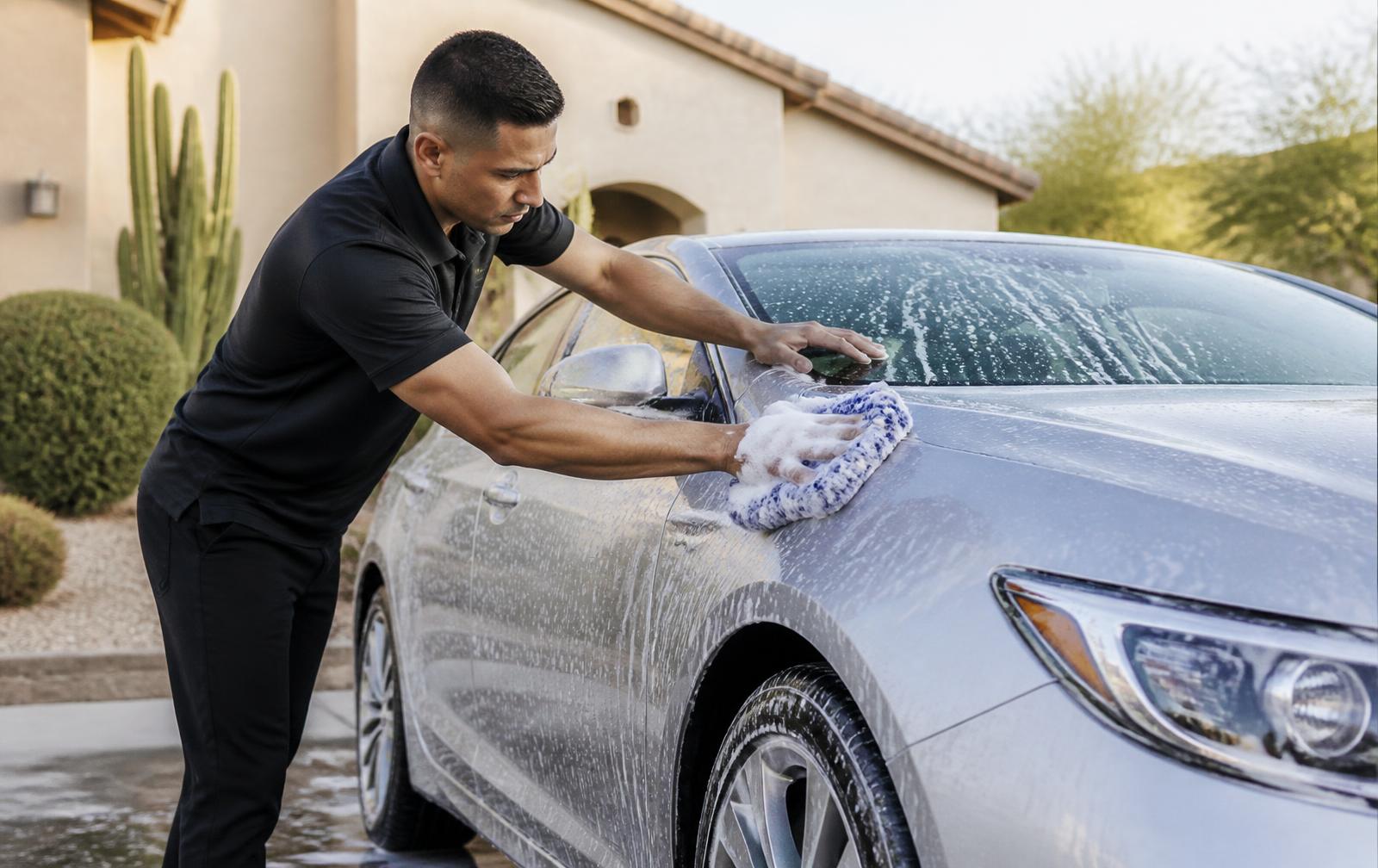
- Hand wash with two buckets and grit guards. Rinse the mitt out of the wash bucket, not into it.
- Use a pH-neutral automotive soap. Skip dish soap and aggressive degreasers on coated paint.
- Keep wash media clean. A dropped mitt goes in the laundry, not back on the car — that's where most swirls come from.
- Dry deliberately. Filtered or deionized water where you can, plush drying towels, and wash in shade so panels aren't hot.
- Avoid brush-style automatic tunnels. They will marr coated paint the same way they marr uncoated paint.
- Remove bird droppings and bugs promptly. The coating buys time, not immunity.
- Keep sprinklers off the car. Adjust the head or move the parking spot; it's the cheapest paint protection there is.
- Decontaminate periodically. An iron removal treatment once or twice a year keeps the surface behaving properly.
- Inspect and top when appropriate. If beading has gone flat, a maintenance visit with a compatible topper can restore surface behavior.
A coating lowers the difficulty of maintenance. It doesn't remove it. If you'd rather not do the washing yourself, recurring maintenance hand washes keep a coated car in the condition you paid for.
Hard water
Coatings and Phoenix water spots
Water spots are the complaint we hear most from Valley car owners, and they're worth explaining properly. Tap water here carries dissolved calcium and other minerals. When a droplet evaporates, the water leaves and the minerals stay, drying into a visible ring. That's a Type I spot and it wipes off. The problem is heat: on a panel sitting at well over 130 degrees in the summer, evaporation is nearly instant and the mineral concentrates fast, and repeated heat cycles can let it bite into the clear coat. That is a Type II etch, and it needs polishing, not wiping.
What a coating changes: the surface is non-porous and slick, so the deposit sits on the coating rather than in the paint's micro-texture, and it releases with much less effort. It also gives you a wider margin before a spot becomes an etch. What a coating does not change: minerals still land, still dry, and still leave deposits. A coated car parked in a sprinkler's path all summer will still end up spotted, and if you leave deposits long enough they can mark the coating itself.
The practical answers are technique and location. Wash early or in shade so water doesn't flash-dry, dry immediately rather than letting the car air dry, use filtered or deionized water for the final rinse if you have it, and move the car out of sprinkler range. Where spotting has already etched, correction is the fix — our paint correction service handles hard-water etching, and coating afterward is what keeps you from doing it again in two years.
Add-ons
Wheels, glass, and trim
Wheels
Coated wheel faces release baked-on brake dust with a rinse and a light wash instead of aggressive cleaner and a brush. Often paired with wheel and tire care.
Glass
A windshield coating sheds water and makes hard-water film and monsoon grit easier to clear. Glass coatings wear faster than paint coatings because wipers abrade them.
Trim
Exterior plastic trim takes a beating from UV here. Where the product is compatible with the material, a trim coating helps hold color and slows fading.
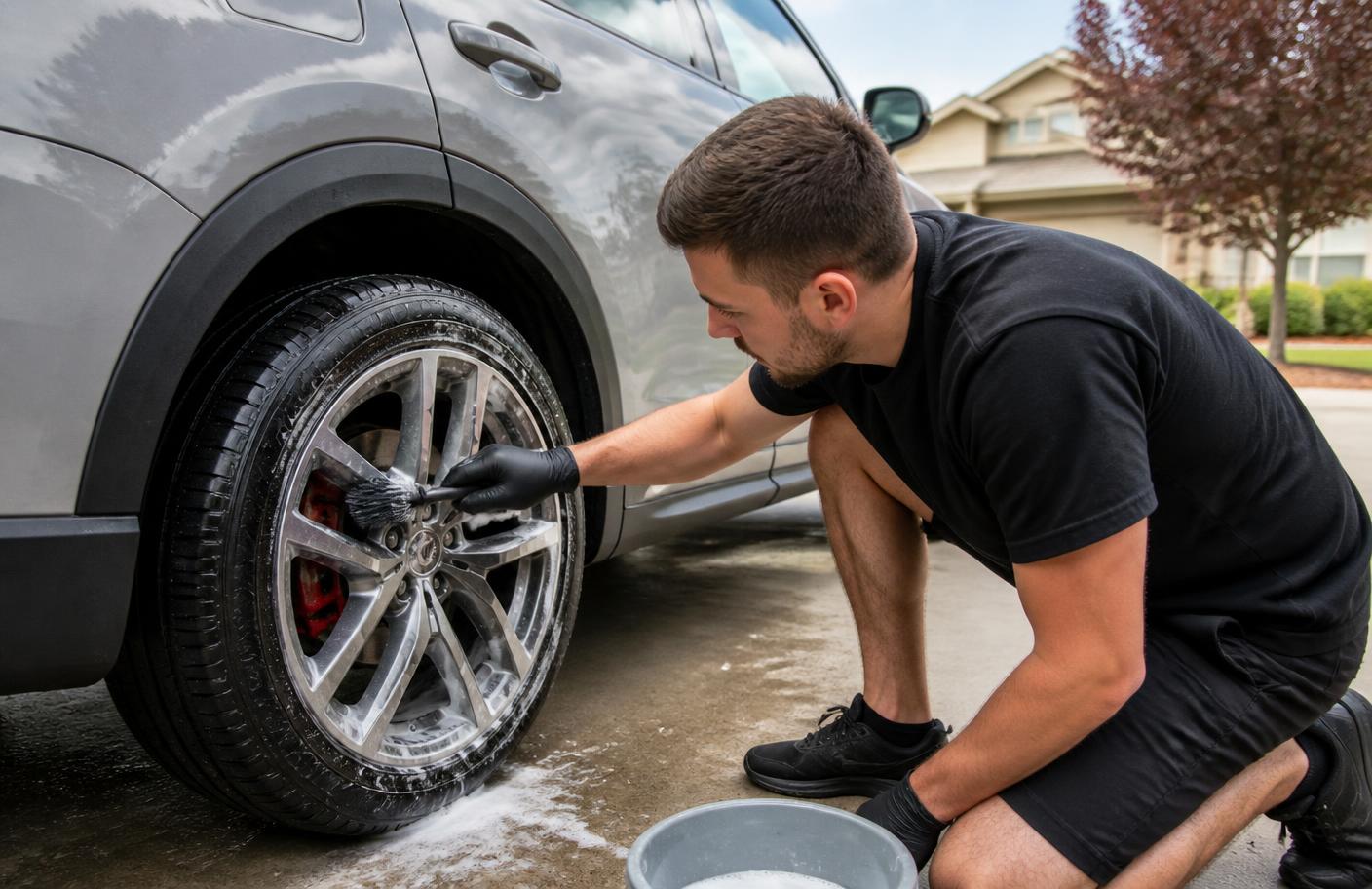
These are quoted as add-ons based on the vehicle and product compatibility — none of them is automatically included in a paint coating, and we'll tell you which ones are worth it for how you actually use the car.
Straight talk
When a coating may not be worth it
- — You want the cheapest protection that gets you through a season. A sealant does that for far less.
- — The vehicle is going up for sale shortly. Spend on a thorough wash, decontamination, and polish instead; it shows in photos.
- — The car needs body or paint repair first. Coat after the bodywork, not before.
- — The clear coat is already failing or peeling. No coating repairs delamination, and polishing a dying clear coat accelerates it.
- — You'll keep using brush-style automatic washes. The coating will get marred and you won't see the benefit you paid for.
- — There's nowhere to install and cure it properly. Full sun, wind, and sprinklers are not workable conditions.
- — Another service would help more right now. Sometimes the honest recommendation is interior deep cleaning or headlight restoration — the things you notice every day.
A detailer who sells coating to every car isn't giving advice, they're taking orders. If coating isn't right for your vehicle, we'll say so and tell you what we'd do instead.
Coverage
Where we install coatings
Coating appointments run across the metro, most often in North Phoenix, Arcadia, Biltmore, Desert Ridge, and Ahwatukee, where garages and covered parking make a controlled installation straightforward. We also cover Scottsdale, Paradise Valley, Tempe, Mesa, Chandler, Gilbert, Glendale, and Peoria. See every area we cover, or browse all detailing services.
Questions
Ceramic Coating FAQ
- Does ceramic coating protect against the Arizona sun?
- It adds a UV-resistant sacrificial layer over your clear coat, which slows the fading and oxidation that direct sun causes. It reduces the rate of damage; it does not stop sun exposure entirely, and shaded or covered parking still helps.
- Can you apply a coating outdoors in Phoenix?
- We prefer a garage, carport, or shaded area. Coatings flash faster on hot panels, so we schedule early mornings during summer and work panel by panel in shade to keep the application controlled.
- How long does the appointment take?
- Plan on most of a day for wash, decontamination, correction, and application. The exact time depends on vehicle size and how much paint correction the finish needs.
- Do I need paint correction first?
- If the paint has swirls, wash marring, or oxidation, yes — otherwise the coating preserves those defects. We inspect before quoting so you know which correction level is being recommended and why.
- How do I wash a coated car?
- Hand wash with a pH-neutral soap and clean microfiber, dry with filtered or deionized water where you can, and avoid brush-style automatic washes. Coated paint is easier to clean, not maintenance-free.
- How much does ceramic coating cost in Phoenix?
- It is quoted per vehicle because the coating itself is the small part of the job. Size, paint condition, how much decontamination and correction the finish needs, and which surfaces you want coated all move the number, so we look at the car before giving a figure.
- How long does ceramic coating last in Arizona?
- Longer than wax or sealant, but we don't quote a fixed number of years. Outdoor parking, sun load, mileage, wash technique, and hard-water exposure all affect how long a coating keeps behaving like it did on day one, which is usually sooner than it fully wears away.
- Does ceramic coating prevent water spots?
- No. It makes minerals sit on top of a slick surface so they wipe off more easily and have a harder time etching quickly, but Valley hard water can still spot a coated car — especially if it dries on a hot panel or you park near sprinklers.
- Does ceramic coating prevent scratches?
- No. It is not scratch-proof and it will not stop rock chips or door dings. It adds a thin, chemically resistant layer that helps with light wash marring; if you want impact protection, that is paint protection film, which is a different product.
- Can you apply ceramic coating at my home?
- Yes, that is how we work — in your garage, carport, covered parking, or a shaded driveway. We confirm the space and conditions when you book, since application and the initial cure need shade and a dry vehicle.
- How long does the coating need to cure?
- Products differ, so we give you the specific window for the coating used on your car. Practically, expect to keep the vehicle dry and out of sprinklers and rain for the initial cure period, then ease back into normal washing.
- Is ceramic coating worth it on a daily driver?
- Usually yes, if the car lives outside and you plan to keep it. The payoff is maintenance: dust, bug splatter, and monsoon film release with far less scrubbing, which is what keeps swirls out of daily-driver paint.
- Is ceramic coating worth it on a new car?
- New paint is the easiest case — it typically needs decontamination and light enhancement rather than heavy correction, so more of the budget goes into protection instead of repair.
- Can you ceramic coat a black car?
- Yes, and dark paint benefits the most visually. It also shows every defect, so black cars usually need more correction before coating for the result to look right.
- Is ceramic coating better than wax in Arizona?
- For durability, yes — carnauba struggles on Phoenix horizontal panels. But if you want cheap, short-term protection or you're selling the car soon, a sealant or wax is the more sensible spend.
- Can you coat wheels, glass, and trim?
- Those surfaces can be coated with compatible products and are quoted as add-ons rather than assumed. Coated wheels release brake dust more easily and coated glass sheds water and mineral film faster.
Services that pair with this
Multi-Stage Paint Correction
Machine polishing that levels swirls, holograms, oxidation, and water etching instead of hiding them under filler.
Exterior Hand Wash & Wax
Contact-safe hand wash, wheels and tires, bug and tar removal, and a durable sealant or wax finish.
Headlight Restoration
Wet sanding and polishing that removes the oxidized layer from yellowed lenses, then re-protects the bare plastic.
Booking this in your area
Popular locations for this service: Scottsdale, Arcadia, North Phoenix. See every area we cover.
Book premium ceramic coating in Phoenix
Tell us about the vehicle and where it's parked and we'll put together a realistic estimate. Prefer to talk it through? Call (623) 244-4484.
Browse all 14 detailing services or read the Phoenix detailing cost guide.