Multi-Stage Paint Correction in Phoenix, AZ
Paint correction is controlled machine polishing used to permanently reduce or remove defects that sit within the polishable portion of your finish — swirl marks, wash marring, light scratches, holograms from a rotary buffer, oxidation and haze, and some water-spot etching. The abrasive refines the clear-coat surface so light reflects evenly again, rather than filling the defect and hiding it for a few weeks.
Phoenix paint usually arrives with a combination of causes: relentless sun on the horizontal panels, hard-water spotting from sprinklers and midday rinses, constant desert dust, and years of washing — often at brush tunnels — that installs marring faster than anything the road does. Correction addresses that history. What it cannot do is add clear coat back, which is why the work is measured and the assessment comes first.
Process
How correction is staged
Step 1
Assessment
Paint condition, color, panel history, and any repainted or failing areas are identified before anything touches the surface, so the plan matches the vehicle.
Step 2
Safe hand wash
Two-bucket wash with clean media. Any grit left on the panel gets dragged by the pad and creates new scratches.
Step 3
Chemical decontamination
Iron fallout and mineral deposits are dissolved rather than abraded off, which removes contamination without adding marring.
Step 4
Mechanical decontamination
Clay or a fine medium where the surface still feels rough, so the pad rides on paint instead of on embedded grit.
Step 5
Dry and inspect
Panels are dried carefully, then read under multiple angles to map where defects actually are — usually worst on hood, roof, and trunk.
Step 6
Focused lighting inspection
Hard inspection lights reveal swirls, holograms, and etching that ambient sun and shade both hide.
Step 7
Test spot
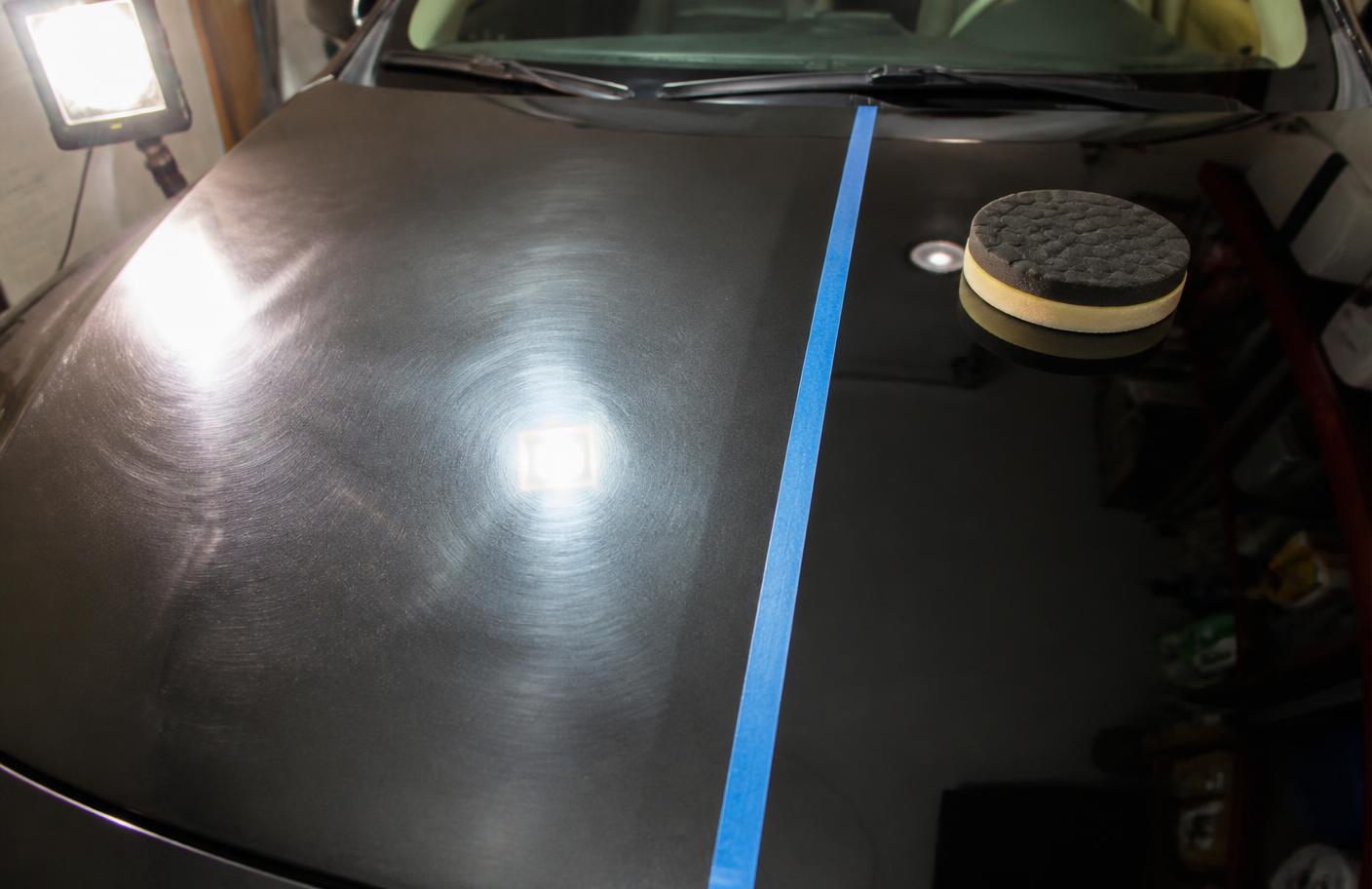
A taped section is polished with the mildest pad and abrasive combination that has a chance, stepping up only if the defects require it.
Step 8
Pad and abrasive selection
The tested combination sets the plan for the rest of the car, panel by panel, based on how your paint actually responds.
Step 9
Cutting stage
Where needed, the heavier stage that removes deeper swirls, oxidation haze, and etching on the panels carrying real damage.
Step 10
Refinement stage
A finer pad and polish to clear any haze the cutting stage left and restore reflection depth — the stage dark paint depends on most.
Step 11
Edges and body lines
Edges, crowns, and body lines carry thinner clear coat, so they are worked with lighter pressure or by hand.
Step 12
Final panel inspection
Every panel is re-checked under multiple light angles so the result holds up in more than one direction.
Step 13
Panel wipe
A residue-removing wipe strips polishing oils so what you see is the corrected surface, not a temporarily filled one.
Step 14
Protection
Bare polished paint is sealed the same day — sealant, wax, or a ceramic coating depending on what you want out of it.
What you get out of it
- Removes swirl marks and wash-induced marring rather than masking them
- Reduces chalky, oxidized haze on sun-exposed panels
- Improves gloss and reflection clarity on dark colors
- Prepares the surface properly if a coating comes next
- Makes water spotting and etching less visible where it hasn't reached the paint layer
Realistic expectations
- — Correction levels are a range, not a guarantee — some defects are too deep to safely remove.
- — A single-stage polish improves gloss; multi-stage is what removes deeper defects.
- — Trim, badges, and edges are taped off, which adds time to the appointment.
- — Corrected paint should be protected immediately to keep the result.
Local context
What Phoenix paint usually needs corrected
The most common combination we see in the Valley: an oxidized horizontal plane and a relatively healthy set of vertical panels. Sun sits on the hood and roof all summer, so those surfaces fade and haze years before the doors do. Correction on those panels alone can change how the whole car reads.
Second is hard-water etching. Sprinkler spray in a driveway off Bell Road or a quick rinse at midday leaves mineral rings that bake in. Light etching polishes out. Deep etching that has cut through the clear coat does not, and we will tell you which one you have instead of promising a result we can't deliver.
Third is desert-dust marring. Fine grit settles constantly, and drying a dusty car with a towel is exactly how swirl marks appear. If the car is regularly washed at a brush tunnel off a busy corridor like I-17 or US 60, expect the classic spiderweb pattern under direct sun.
The basics
What paint correction actually is
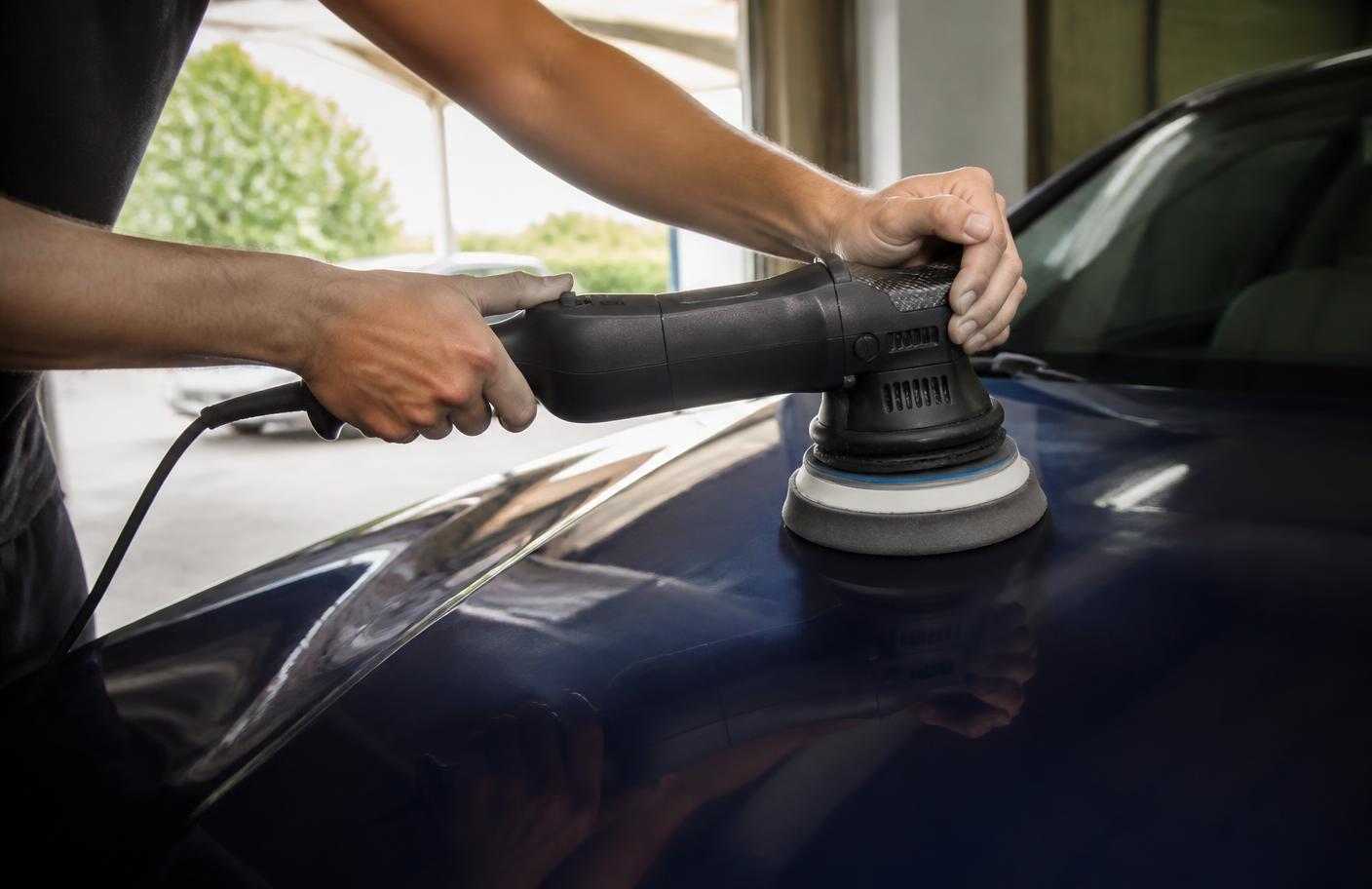
Paint correction is controlled machine polishing. A dual-action polisher drives a foam or microfiber pad carrying an abrasive liquid across the clear coat, and that abrasive refines the surface — smoothing the raised, torn edges around each scratch until light passes through and reflects evenly again instead of scattering. The work is measured in fractions of the clear coat, and the entire craft is in removing as little as possible while still producing a real, visible improvement.
The important distinction is between correcting a defect and hiding one. A glaze or an all-in-one product deposits oils and fillers into the scratch so it disappears under showroom lighting. It looks convincing for a few weeks, then the fillers wash out and the swirls come back exactly as they were. Correction changes the surface itself, so the improvement does not rinse away.
"Polishing" and "correction" sit on the same spectrum. Every correction is polishing; not every polish is a correction. A light polish raises gloss and cleans up haze. A correction is polishing with a defined target — measurably fewer visible defects when the panel is inspected under a hard light. What separates the two is the aggressiveness of the pad and abrasive, the number of stages, and how much time goes into refinement afterward.
The goal is never "cut down to the bottom of the deepest scratch." Clear coat is a finite, non-renewable layer, typically thinner than most people assume, and it is the only thing standing between Arizona sunlight and the color coat underneath. Leaving a trace of a deep scratch visible is almost always the better outcome than thinning the clear coat to chase it.
Scope
Defects machine polishing can remove or improve
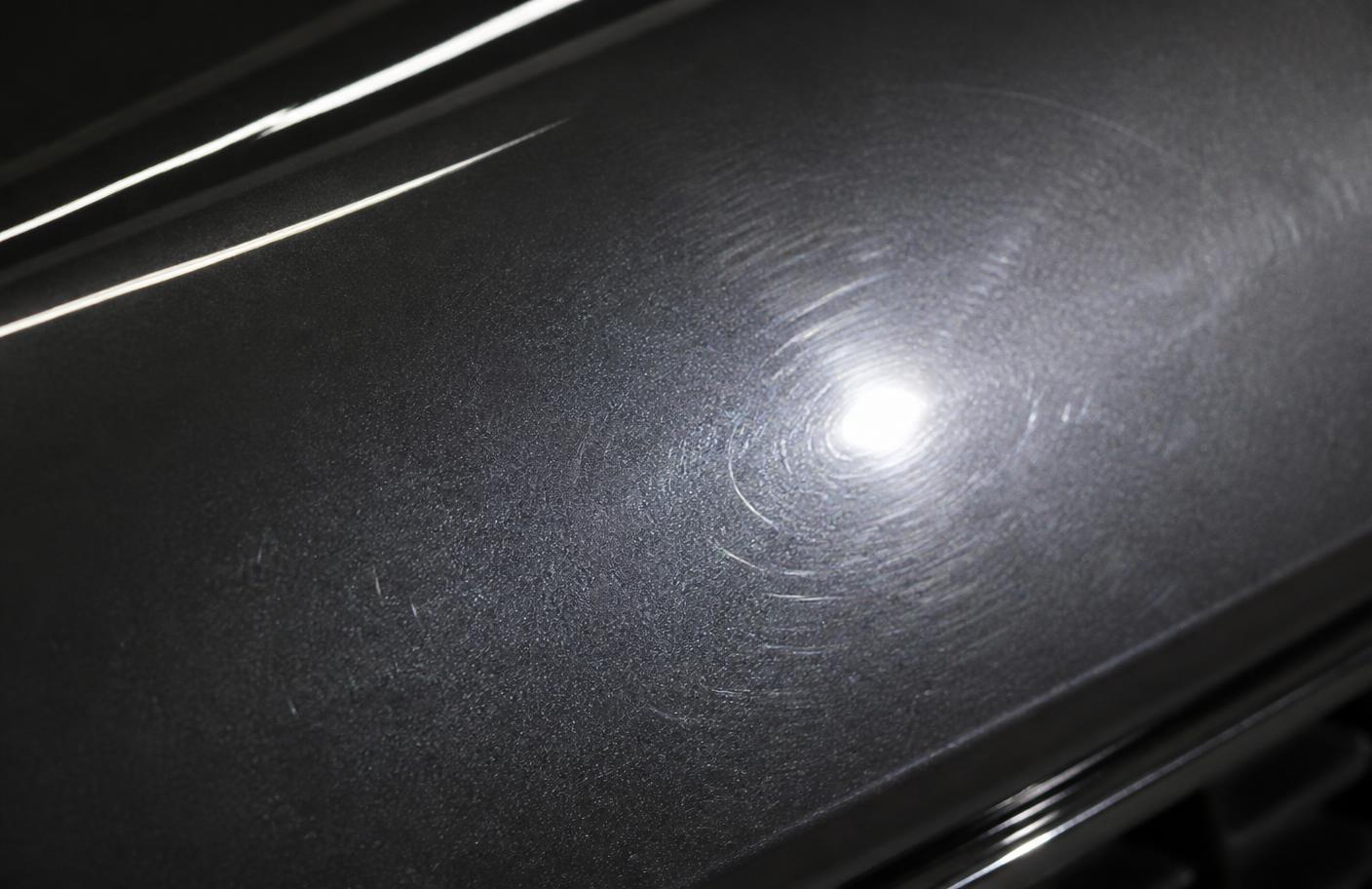
Swirl marks and spiderwebbing
The circular halo pattern that appears around a light source. These are shallow wash-induced scratches and they are the single most correctable defect on a Phoenix daily driver.
Automatic car wash marring
Brush tunnels lay down dense, uniform micro-scratching across horizontal panels and door faces. Usually reduced substantially, often removed outright on healthy clear coat.
Towel and drying scratches
Straight-line marring from dry wiping or a contaminated towel. Typically shallow and responsive to a single refining stage.
Holograms and buffer trails
Wavy shadowing left by an aggressive rotary pass with no refinement step. Correcting this is mostly a refinement problem, not a cutting one.
Light scratches
Scratches confined to the upper clear coat can be removed or made far less visible. Depth decides the outcome, and depth is judged on the vehicle.
Oxidation and haze
Chalky, flat-looking paint where the clear coat is still intact usually polishes back to gloss. Where the clear coat has failed, polishing is not the answer.
Light water-spot etching
Mineral rings that have started to bite into the clear coat can often be reduced or removed. Deeper etching may only be improved.
Superficial bird-dropping etching
Caught early, the etched ring polishes out. Left through a Phoenix summer, it can reach further than polishing can safely follow.
Sanding marks
In appropriate situations — a recent refinish, for example — sanding marks are refined out with a staged polish.
General dullness
Loss of clarity from years of light abrasion. Refining the surface restores reflection sharpness even when no single defect stands out.
Whether any individual defect is removed, reduced, or simply improved depends on how deep it sits and how much healthy clear coat is available above it. That is a judgment made with the vehicle in front of us and a light on the panel — not from a photo and not over the phone.
Limits
What polishing cannot fix
- — Rock chips — material is missing, not displaced
- — Dents and creases
- — Scratches through the clear coat into base coat
- — Peeling or flaking clear coat
- — Clear-coat delamination
- — Severe clear-coat failure across a panel
- — Exposed primer
- — Exposed metal
- — Deep keyed scratches
- — Cracking or checked paint
- — Failed or poorly adhered repaints
Each of these represents damage that has gone past the polishable layer, or damage where material is missing rather than displaced. Abrasives cannot add clear coat back, and they cannot reattach a coating that has lost adhesion. Polishing a panel with failing clear coat usually accelerates the failure.
There is also a restraint principle worth stating plainly: chasing one stubborn scratch across a panel can cost more clear coat than the cosmetic gain is worth. A finish that looks excellent with one faint line still visible is a better long-term outcome than a perfect-looking panel with dangerously thin clear coat. When we hit that point, we stop and tell you.
Diagnosis
The fingernail test, in proper context
The common advice is that if your fingernail catches a scratch, it cannot be polished out. It is a useful rough indicator of depth, and nothing more. A fingernail catching tells you the defect has real depth relative to the surface — it does not tell you whether that depth is in the clear coat, how much clear coat sits around it, or whether a staged polish would make it much less noticeable.
Plenty of scratches that catch a nail can be improved substantially: softened at the edges, shortened, and made invisible outside of direct sunlight. Others cannot be touched safely at all. The call depends on defect depth, the paint system, whether the panel has been polished or repainted before, how much clear coat remains, where on the car the defect sits, and whether the risk is worth the cosmetic return.
What we will not do is quote a scratch outcome sight unseen in either direction — neither promising it will vanish nor writing it off before looking at it under a light.
Choosing a level
One-step versus multi-stage correction
| Level | Stages | Best suited to | What it means in practice |
|---|---|---|---|
| Gloss enhancement | Single light polish | Newer or well-maintained paint, minor haze, owners who mainly want gloss and clarity back | Minimal clear-coat removal. Improves reflection quality without chasing individual defects. |
| One-step correction | One combined cut-and-finish pass | Daily drivers with light to moderate swirling | The value pick. Substantial visible improvement without the labor of pursuing perfection. |
| Two-step correction | Cutting stage, then refining stage | Moderate to heavier defects, dark paint, vehicles being prepped for a coating | The cutting stage does the removal; the refining stage restores clarity the cut left behind. |
| Multi-stage / advanced | Multiple cutting and refining passes, panel by panel | Demanding finishes, heavier correctable defects, enthusiast and collector vehicles | Justified when the finish warrants it. Diminishing returns are steep at this level. |
We do not attach removal percentages to these levels, because a percentage promised before the paint has been tested is a marketing number rather than a technical one. Two cars of the same model and color can respond very differently depending on how they have been washed and whether a panel has been refinished.
What is consistent is the shape of the curve. The first pass produces the largest visible change for the least labor and the least clear-coat removal. Each additional stage produces a smaller improvement for more time. The last remaining fraction of visible defects — the faint deeper lines you only find with a light held at the right angle — can require dramatically more work and more clear coat than the rest of the job combined. For most daily drivers, that final fraction is not a sensible trade.
Assessment
How we decide how much correction a car needs
The correction level should be dictated by the vehicle and by what you want from it — not by whichever package is largest. Before recommending anything we look at current paint condition and how defects are distributed across panels, the age of the vehicle, and the color, because color changes how visible the remaining defects will be when we are done.
We also want to know the history: has the car been polished before, and how aggressively? Are any panels repainted? Repaint work varies enormously in quality and thickness, and it is treated with more caution than factory paint. Clear-coat condition matters most of all — a panel showing early signs of failure gets handled conservatively or left alone.
Then there is the part only you can answer. A daily driver parked outside at an office in Tempe has different economics than a weekend car that lives in a garage. If a ceramic coating is going on afterward, the prep threshold rises, because the coating will lock in whatever the paint looks like on that day. And budget is a legitimate input: a well-executed one-step on a car with moderate swirling is a better outcome than a multi-stage job stretched too thin.
Method
Why the test spot decides everything
Automotive paint systems are not interchangeable. Hardness varies by manufacturer, by plant, by model year, and by whether a panel is factory or refinished. Some finishes cut easily and finish down beautifully; some resist the abrasive but haze the moment you push too hard; some are soft enough that an aggressive pad creates more problems than it solves.
So we do not assume. We tape off a representative section — usually somewhere with typical defect severity, not the best or worst panel — and run the mildest pad and abrasive combination we think has a chance. Then we inspect it under direct light. If it clears the defects, that is the combination for the whole car. If it does not, we step up one increment and test again.
The principle is the least aggressive method that produces the desired result. It takes longer up front and it saves clear coat on every panel afterward. It also gives you something concrete to look at: the tested section next to untouched paint shows the realistic outcome for your car before you commit to the scope.
Local conditions
Why paint gets damaged in Phoenix
Sun and heat
Horizontal panels take the brunt of it. Hoods, roofs, trunk lids, and the upper shoulders of fenders receive hours of near-vertical UV through a summer that runs far longer than most of the country's. Over years, UV degrades the resin at the very top of the clear coat, which is what produces the flat, chalky, slightly grey appearance owners describe as fading. Where that degradation is confined to the surface, polishing restores the gloss. Where the clear coat itself has begun to break down and lift, it cannot — and no amount of polishing changes that.
Hard water
Valley water carries a heavy mineral load, and there are three common paths onto paint: sprinkler overspray in a driveway, rinsing a car in the middle of the day, and washing a panel that is already hot. In every case the water evaporates fast and leaves the minerals behind. There is a real difference between a mineral deposit sitting on the surface, which decontamination removes, and etching, where the deposit has been baked in and left a depression in the clear coat. The first is a cleaning job; the second is a polishing job, and only up to a point.
Desert dust
Fine grit settles on every car here continuously. On its own it is harmless. It becomes abrasive the moment someone drags something across it — a quick dry wipe before a meeting, a towel that was dropped and picked up, a wash mitt that never got rinsed, or a dirty drying towel pulled over a panel. That is the origin of most of the swirl marks we correct, and it is why aftercare technique matters as much as the correction itself.
Automatic car washes
Repeated brush and cloth tunnel washes leave a distinctive signature: dense, even marring across every horizontal surface and the widest part of the doors, with heavier scarring near the rear quarter panels where the media wraps. It is correctable. It is also completely repeatable, which is why we ask what your wash routine is before recommending a level of correction.
Monsoon season
Dust storms followed by rain deposit a gritty film that dries onto the paint, and the road grime kicked up afterward adds to it. The contamination itself is rarely the damage. The damage comes later, when that layer gets wiped, brushed, or washed off with insufficient lubrication. A proper hand wash after a monsoon event prevents far more marring than it costs.
Color
Black and dark-colored vehicles
Black, dark blue, dark grey, and deep red do not attract more defects than silver or white — they simply refuse to hide them. Dark paint reflects like a mirror, so every scratch that scatters light shows up as a bright line against a dark background. Arizona sunlight, gas-station canopy LEDs, and a garage bulb over the hood are all excellent swirl-finding tools on a black car.
This cuts both ways. Dark vehicles show the most dramatic before-and-after from correction, because the defects you are removing are the ones doing the most visual damage. They also demand more refinement work, since any haze left by the cutting stage is just as visible as the swirls that were there before. That refinement time is the real reason dark cars take longer.
One myth worth retiring: black paint is not inherently soft. Hardness is a property of the paint system the manufacturer used, and there are hard black finishes and soft white ones. That is precisely what the test spot is for.
New vehicles
New cars can need correction too
A car with delivery miles is not automatically defect-free. Vehicles arrive with transport film residue and rail dust, get washed at the dealership with whatever media is on hand, and are frequently prepped under time pressure. Light swirls installed during that prep wash, water spotting from a rinse in the sun, and adhesive residue from badges or transport tape are all common on brand-new paint.
This is why a new vehicle scheduled for a coating usually receives at least a light enhancement polish first. A coating cures over whatever is underneath it — if you seal in dealer-prep marring, you are looking at it for years. That does not mean every new car needs correction. Some genuinely arrive clean, and we will tell you when yours has.
Correction and coating
Correction improves the paint. Coating protects it.
These are two different jobs and they happen in a specific order. Correction is the cosmetic work — it is what changes how the paint looks. A ceramic coating is protection and maintenance behavior — it is what keeps the finish easier to clean and slows how quickly it degrades in the sun.
A coating does not remove swirl marks, scratches, holograms, or oxidation. It bonds over them, and because it adds gloss and depth, it can make defects underneath appear slightly more pronounced rather than less. Anything that bothers you about the finish should be addressed before the coating goes on, because removing a cured coating to fix it later means polishing the coating off first.
If a coating is the plan, the correction stage is not an upsell — it is the part of the job that determines the result. Read through the premium ceramic coating page for how the protection side works, then we can scope both together.
Terminology
Correction, polishing, and 'buffing'
Polishing is the broad term: using an abrasive liquid and a machine to refine a paint surface. It covers everything from a gentle gloss pass to heavy cutting.
Paint correction is goal-oriented polishing. The objective is a measurable reduction in visible defects, verified under inspection lighting, using however many stages that requires.
Buffing is an informal word with no fixed meaning. Depending on who says it, it might describe a full multi-stage correction, a quick one-pass gloss job, or an all-in-one product wiped on with a machine. It is not a service definition.
Because the vocabulary is loose, compare the work rather than the words. Ask how many stages are planned, what the test spot showed, what defects will realistically remain, how the result will be inspected, and what protection goes on afterward. Those answers describe the job. The label does not.
Comparison
Paint correction versus scratch removal
Correction addresses defects spread across the whole vehicle — the general condition of the finish. Isolated scratch work targets one specific piece of damage: a key line down a door, a mark from a shopping cart, a gouge along a bumper corner.
Some individual scratches polish out completely. Some can be improved to the point that they are hard to find outside of direct sun. Some sit through the clear coat and need touch-up paint or a body shop refinish, which is a different trade entirely. We are straightforward about which category a scratch falls into after looking at it, and we will point you to a refinisher when that is the honest answer. Related surface work we do handle includes overspray removal and headlight restoration, which uses the same staged sanding-and-polishing logic on polycarbonate rather than clear coat.
Cost
What paint correction costs in Phoenix
We quote correction per vehicle after seeing it, because the labor is driven by condition rather than by a category the car falls into. The factors that move a quote are consistent: vehicle size and panel count, current paint condition, how the paint responds in the test spot, the number of polishing stages required, defect severity and distribution, how much decontamination the surface needs first, previous repairs or repainted panels, the level of finish you are after, total time on the machine, and which protection goes on at the end.
Two concrete examples make the point. A two-year-old compact sedan in silver, washed by hand, with light marring from dealer prep is essentially a one-step job on a small surface area — the paint responds quickly and the refinement burden is low. A black full-size SUV that has been through tunnel washes weekly for four years is a fundamentally different project: far more surface area, dense marring that needs a genuine cutting stage, and a color that shows every trace of remaining haze, so refinement time roughly doubles.
That is why pricing correction purely by vehicle size does not work. Size sets the floor; condition sets the actual number. If you want to understand how we approach pricing across the whole menu, the Phoenix detailing cost guide walks through it, and the full service list shows what else may be worth bundling into the same appointment.
Timing
How long correction takes
A gloss enhancement on a well-kept car is the shortest version of this service, but it still includes a full decontamination wash before any machine touches the paint. A one-step correction on a typical sedan is a substantial appointment. A two-step or multi-stage job is a full day, and on larger or heavily damaged vehicles it can extend beyond one visit.
Labor climbs with vehicle size, paint condition, defect severity, and the level of refinement you want at the end. Preparation is not a small share of it either — the wash and decontamination stages have to be thorough, because a single piece of grit under the pad undoes the work. We give you a realistic window when we scope the job rather than promising every vehicle finishes the same day.
Durability
Is paint correction permanent?
The defects that were physically removed are gone. They do not migrate back, fade in, or reappear after a few washes — that is the difference between correction and a filler product, and it is the reason correction is worth doing properly once rather than cheaply every year.
What is not permanent is the condition of the finish. New defects can be introduced immediately by a brush tunnel, a dirty towel, a dry wipe over dusty paint, or careless drying. A corrected car can be back to visible swirling within a month of poor washing. Correction is permanent for what it removed; it does not make the paint defect-proof.
Protection
What to do after correction
Polished paint is bare. Whatever protection was on the surface came off with the abrasives, so something goes back on the same day. There are three sensible answers and no single correct one.
Wax gives warm gloss and short-term protection with the lowest commitment. It suits owners who enjoy reapplying it and are not looking for a long-term product. In Phoenix heat it has a short life.
Paint sealant is the practical middle. Synthetic, more heat- and detergent-resistant than wax, meaningfully more durable, and a good fit for a daily driver where a coating is not justified. This is what comes with our exterior hand wash and wax service.
Ceramic coating is the longest-term option and the easiest to maintain, provided you are willing to wash the car properly. It is the natural pairing with a two-step or multi-stage correction, because it preserves the work you just paid for. It is not mandatory, and we will not tell you it is — see the ceramic coating page for what it does and does not do.
Aftercare
Keeping corrected paint corrected
Wash by hand, with two buckets
Separate rinse water keeps the grit you just removed from going back onto the paint on the next pass.
Use clean wash media
A mitt that touched the ground is finished. Wheels and lower rockers get their own mitt, always.
Use proper drying towels
Large, plush, clean microfiber. Blot and draw rather than scrub, and never reuse a towel that has been dropped.
Never dry wipe dusty paint
The single fastest way to reinstall swirl marks in Phoenix. If the car is dusty, rinse it — do not wipe it.
Stay out of brush tunnels
Touchless is a compromise; contact tunnels will undo a correction faster than anything else on this list.
Keep lubrication high
A generous soap film is what lets the mitt glide instead of grinding. Thin suds are where marring starts.
Deal with bird droppings fast
On a hot panel the etching clock runs in hours, not days. Keep a detail spray and a clean towel in the car.
Do not let hard water dry on paint
Rinse early morning or in shade, and dry immediately. Sprinkler spray on a parked car is worth relocating for.
Maintain your protection
Wax, sealant, and coatings all deplete. Refreshing on schedule keeps the maintenance easy and the surface slick.
The whole objective after a correction is simple: stop recreating the defects that were just removed. Nearly all of them came from washing and drying, which means nearly all of them are avoidable.
Honesty
When paint correction is not worth it
There are vehicles we recommend against correcting, and saying so is part of the job. If the clear coat is failing — peeling at the roof edge, dulling in patches that do not respond to a test polish — polishing will accelerate it rather than fix it. If the car needs body or paint repair, that work comes first; correcting around a panel that is about to be refinished wastes money.
If you are selling the car next month and want inexpensive presentation, a thorough wash and wax delivers most of the visual return for a fraction of the cost. If you intend to keep using brush washes, a multi-stage correction will not survive the quarter. If the defects are too deep to chase safely, or the improvement would not justify the clear coat it costs, we say so.
And sometimes another service is simply the right answer: paint that feels rough is a decontamination problem, hazy headlights are a restoration job, and speckled paint near a construction site is usually overspray, not swirling.
Mobile service
Doing this properly at your location
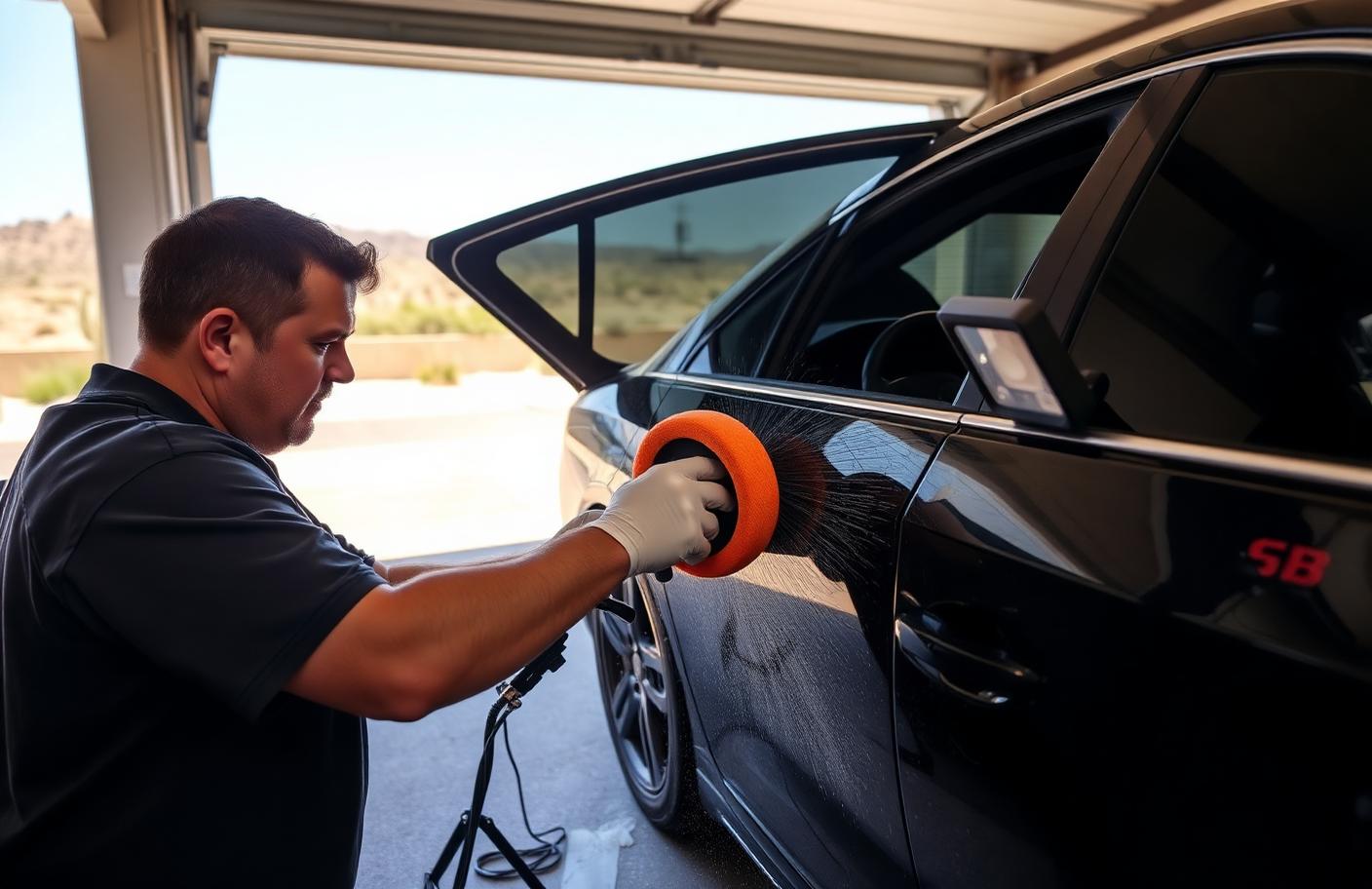
Correction is the most environment-sensitive service we offer, so location matters more here than it does for a wash. A closed or partially closed garage is ideal. A carport, covered parking space, or a driveway that holds real shade for the length of the appointment can work well. What does not work is an open lot in full sun in July: hot panels flash the abrasive liquid before it can finish working, and wind-carried dust lands on a freshly polished surface.
Phoenix stacks the challenges — direct sun, panel temperatures well above ambient, blowing dust, and summer heat that shortens the usable working window in the afternoon. We plan around it with early starts and covered work areas, and we will tell you honestly if your parking situation is not suitable for the level of correction you want rather than delivering a compromised result.
We also bring our own inspection lighting. Ambient sunlight is inconsistent and directional, and a panel that looks flawless in shade can reveal holograms under a hard light. Correction inspected only by daylight is correction that has not really been inspected.
Who books this
Vehicles that benefit most
Daily drivers make up most of our correction work, and they are usually the clearest case: several years of washing has left uniform marring, and a single well-executed stage transforms how the car reads. Dark vehicles of any type follow closely, since the defects being removed are the ones doing the most visible damage.
Luxury sedans and sports cars often come to us before a coating, where the finish quality is the entire point. New vehicles get a light enhancement as coating prep. Older, well-maintained cars with original paint are frequently excellent candidates — provided the clear coat is healthy, decades of gentle use leaves paint that responds beautifully.
SUVs and trucks are mostly a surface-area question: same process, considerably more panel, and roofs that take the worst of the sun. EVs and Teslas come up often, and the relevant point is not the drivetrain but the paint system — several EV finishes are on the softer side, which makes the test spot and the refinement stage especially important. Enthusiast and collector vehicles get the multi-stage treatment when the finish justifies it.
Where we work
Paint correction across the Valley
We run correction appointments throughout Phoenix and the surrounding Valley, and the practical constraint is always shade and space rather than distance. Garage appointments in Arcadia, Biltmore, Paradise Valley, and Scottsdale are the most common, with covered-parking work across Central Phoenix, North Phoenix, Desert Ridge, and Ahwatukee. East and West Valley appointments in Tempe, Mesa, Chandler, Gilbert, Glendale, and Peoria are routine. See every area we cover if your neighborhood is not listed.
Questions
Paint Correction FAQ
- What is paint correction?
- Controlled machine polishing. A machine-driven pad carries an abrasive liquid across the clear coat and refines the surface so defects are reduced or removed and light reflects evenly again. Unlike a glaze or all-in-one, it changes the surface rather than filling the defect, so the improvement doesn't wash out.
- How much does paint correction cost in Phoenix?
- We quote per vehicle after inspecting it, because condition drives the labor more than vehicle class does. Size, paint hardness, defect severity, contamination, previous repaints, the number of polishing stages, and the protection you choose afterward all move the number. A lightly swirled compact sedan and a black SUV with years of tunnel-wash damage are very different jobs.
- Does paint correction remove scratches?
- Scratches confined to the upper clear coat can often be removed. Deeper ones are usually reduced and made much harder to see. Scratches through the clear coat into base coat, primer, or metal need touch-up or refinishing, not polishing. We tell you which category yours falls into after looking at it under a light.
- Can paint correction remove swirl marks?
- Swirl marks are the most correctable defect there is — they're shallow wash-induced scratches. On healthy clear coat they're typically removed outright, and heavy tunnel-wash marring is at minimum substantially reduced.
- Can paint correction fix sun-faded paint?
- Oxidation confined to the clear coat can often be polished back to gloss, which is common on Phoenix hoods and roofs. Paint where the clear coat has actually failed — peeling, flaking, or delaminating — needs refinishing. Polishing failing clear coat accelerates the failure rather than fixing it.
- Can paint correction remove water spots?
- Mineral deposits sitting on the surface come off with decontamination. Light etching, where minerals have bitten into the clear coat, can usually be reduced or removed by polishing. Deep etching may only be improved. We identify which type you have before quoting a result.
- If my fingernail catches a scratch, is it hopeless?
- Not automatically. The fingernail test indicates depth but isn't a definitive diagnosis. Some scratches that catch a nail improve substantially with a staged polish. The decision depends on depth, the paint system, panel history, remaining clear coat, where the defect sits, and whether the cosmetic gain justifies the clear coat it would cost.
- How many stages of paint correction does my car need?
- It depends on paint hardness and defect depth. We run a test spot on your vehicle with the mildest combination that has a chance and step up only if needed, then show you the difference before committing to a level. A gloss enhancement, a one-step, a two-step, and a multi-stage are all valid answers depending on the car.
- Does a new car need paint correction?
- Sometimes. New vehicles can arrive with transport contamination, dealer wash marring, water spotting, or adhesive residue. That's why a new car being ceramic coated usually gets at least a light enhancement first — a coating cures over whatever is underneath. Plenty of new cars genuinely arrive clean, and we'll say so.
- Should I get ceramic coating after paint correction?
- It's the natural pairing but not mandatory. Correction improves the finish; a coating protects the prepared finish and makes it easier to maintain. A coating won't remove swirls, scratches, holograms, or oxidation, so anything that bothers you should be corrected first. A sealant or wax is a reasonable alternative on a daily driver.
- How long does paint correction take?
- A light enhancement is the shortest version and still includes a full decontamination wash. A one-step on a typical sedan is a substantial appointment; a two-step or multi-stage is generally a full day, and larger or heavily damaged vehicles can need an extended or second visit. We give you a realistic window when we scope it.
- Is paint correction permanent?
- The defects physically removed don't come back. What isn't permanent is the condition of the finish — brush washes, dirty towels, dry wiping, and careless drying can install new marring immediately. Correction is permanent for what it removed; it doesn't make paint defect-proof.
- How often can a car be paint corrected?
- As seldom as possible. Every correction removes a small amount of a finite clear coat, so the sensible approach is one thorough correction followed by protection and careful washing, rather than repeated aggressive polishing every year.
- Can you perform paint correction at my home?
- Yes, where conditions allow. A garage is ideal; a carport, covered parking, or a driveway holding real shade for the appointment can work. Direct summer sun, hot panels, and blowing dust are genuine problems for polishing, so we schedule early and work under cover — and we'll tell you if your space isn't suitable for the level you want.
- Is paint correction worth it on a daily driver?
- Often yes, especially a one-step on a car with uniform wash marring — that's the best return in the service. It's not worth it if the clear coat is failing, if the car needs body work first, if you're selling it next month and only want presentation, or if you plan to keep using brush washes.
Services that pair with this
Premium Ceramic Coating
A bonded, hydrophobic layer applied over corrected paint so dust rinses off easier and UV exposure has less to work against.
Exterior Hand Wash & Wax
Contact-safe hand wash, wheels and tires, bug and tar removal, and a durable sealant or wax finish.
Overspray Removal
Removal of paint, stucco, and industrial overspray from paint and glass using clay, chemical, and mechanical stages.
Booking this in your area
Popular locations for this service: Paradise Valley, Biltmore, Central Phoenix. See every area we cover.
Book multi-stage paint correction in Phoenix
Tell us about the vehicle and where it's parked and we'll put together a realistic estimate. Prefer to talk it through? Call (623) 244-4484.
Browse all 14 detailing services or read the Phoenix detailing cost guide.